
Home \ Blog \ Crack Monitoring Services UAE: When Cracks Signal Real Structural Risk
Crack Monitoring Services UAE: When Cracks Signal Real Structural Risk
August 24, 2026
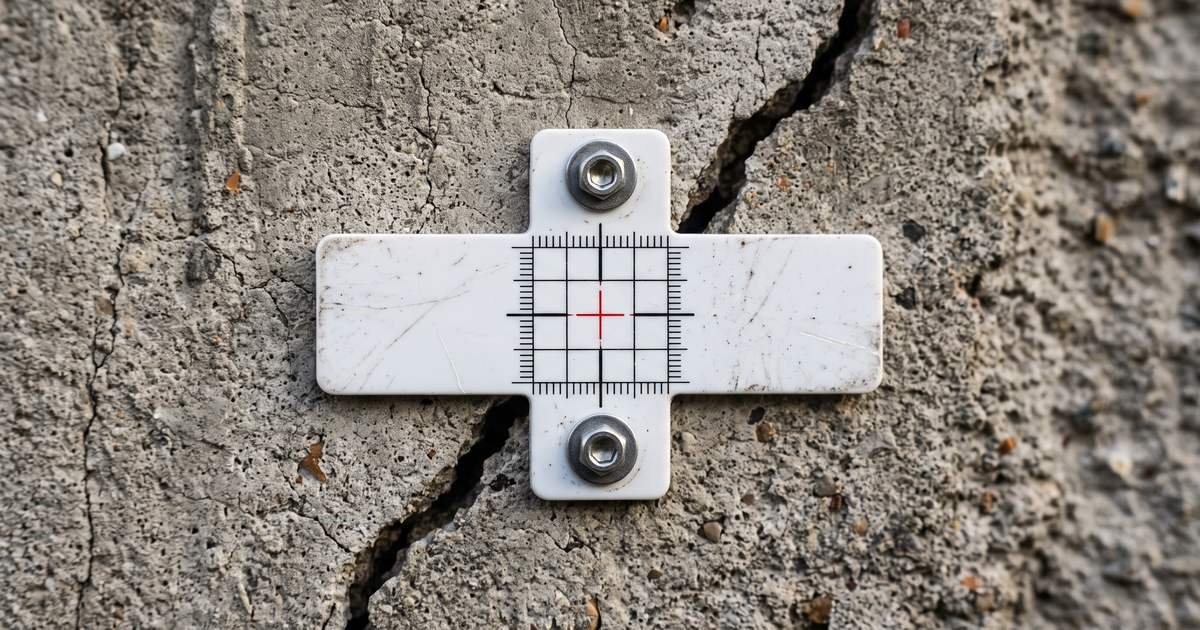
Most cracks in a building are not dangerous. A few are. The problem facing any owner or contractor is that the two look almost identical on the day they are found. Crack monitoring services UAE exist to separate them, by measuring whether a crack is still moving and how quickly. This guide covers what monitoring can and cannot tell you, how gauges are chosen and placed, and what evidence a structural engineer actually needs.
Key Takeaways
- Crack width on its own proves very little. Whether the crack is still moving is the question that matters.
- A crack that opens and closes with the daily temperature cycle is behaving differently from one that widens steadily and never recovers.
- Monitoring supports a structural assessment. It does not replace one, and it cannot explain why the crack formed.
Active Cracks and Dormant Cracks
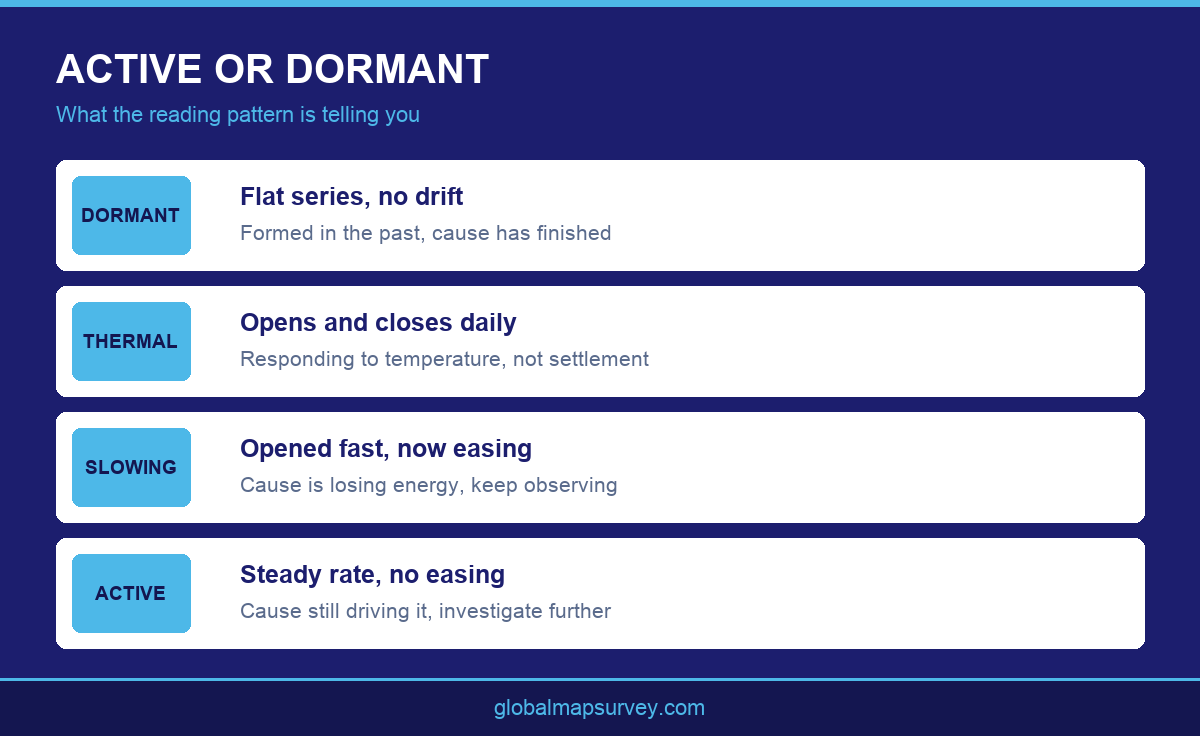
The distinction that drives every decision is whether a crack is active or dormant. A dormant crack formed at some point in the past, reached its final width and stopped. An active crack is still responding to something, which means whatever caused it has not finished.
You cannot tell them apart by looking. A wide dormant crack from shrinkage during curing can appear far more alarming than a fine active crack caused by ongoing foundation movement, yet the fine one is the one that warrants attention. Only measurement over time separates them.
This is why crack monitoring is specified as a period of observation rather than a single inspection. A one off measurement records a width. A series records behaviour, and behaviour is what an engineer can reason about.
The distinction also shapes what happens next commercially. A dormant crack is a repair question, and the repair can proceed once the finish is made good. An active crack repaired before the cause is addressed will simply reopen, often through the new material, which turns one remedial visit into several. Establishing behaviour before specifying repair usually saves money rather than delaying the work.
Choosing and Placing Gauges
The simplest arrangement is a plate gauge fixed across the crack, with one half attached each side, giving a direct read of relative movement. These are inexpensive, easy to install and well suited to walls where someone can visit and record the reading.
Where movement is expected to be very small or readings are needed frequently, a displacement gauge offers finer resolution and can be connected to a logger. That removes the variability introduced by different people reading a scale by eye, which on fine cracks can be a significant part of the apparent change.
Placement matters as much as the device. A gauge should sit across the widest representative part of the crack, on sound substrate, away from render or filler that could break away independently. Where a crack passes through more than one element, monitoring at several positions shows whether the whole line is moving together or only part of it.
Gauges need protecting on live sites. A device fixed at low level in a circulation route will be knocked, painted or removed, and every disturbance breaks the series. Positioning gauges clear of traffic, marking them clearly and briefing the site team that they are instruments rather than debris avoids most of the losses that would otherwise interrupt a monitoring programme.
Redundancy is worth building in where a crack is central to a dispute. A single gauge that fails or gets knocked leaves a gap in exactly the series that will be scrutinised most closely. A second gauge nearby costs very little at installation and means the record survives the loss of any one device without a break in continuity.
Reading the Pattern, Not the Number
Temperature is the first thing to rule out. Concrete and masonry expand and contract daily, and in UAE conditions that cycle is pronounced. A crack that widens overnight and closes through the afternoon is responding to thermal movement, and readings taken at random times will look chaotic for that reason alone.
Recording the time of day and the ambient conditions with every reading turns that noise into information. Once the daily cycle is visible in the data, any drift underneath it becomes far easier to see. A crack that oscillates around a slowly rising mean is doing two things at once, and only the rising mean is structurally interesting.
Rate is the other signal. A crack that opened quickly and has since slowed is behaving very differently from one opening at a steady rate with no sign of easing. The second pattern suggests a cause that is still active, which usually points the investigation toward foundations, ground conditions or loading rather than the crack itself.
Seasonal effects sit underneath the daily ones and take longer to reveal themselves. A crack monitored only through the cooler months may show a trend that reverses once summer arrives. This is one reason short monitoring periods are treated cautiously by structural engineers, and why a programme that spans a full range of conditions carries much more weight than one that does not.
What Crack Monitoring Cannot Tell You
Monitoring measures movement. It does not diagnose cause. A crack widening at a constant rate tells you something is driving it, but not whether that something is settlement, thermal movement, corrosion of embedded reinforcement, overloading or an adjacent excavation.
That is why crack monitoring is normally run alongside other evidence. Level readings on the structure show whether the building is settling. A measured building survey records geometry that can reveal whether a wall is out of plumb. Ground investigation addresses what is happening beneath. Together these narrow the cause down.
It also cannot tell you whether the structure is safe. That judgement belongs to a structural engineer, who weighs the movement data against the structural form, its condition and its loading. The survey team’s role is to deliver measurements the engineer can rely on, at an accuracy fine enough to make the trend real rather than arguable.
It also cannot see what is happening inside the element. Corrosion of embedded reinforcement, for example, expands within the concrete and can drive cracking that looks superficial from outside. Where the pattern suggests something internal, structural health monitoring techniques and material testing are usually brought in alongside the surface measurements.
Building the Evidence Record
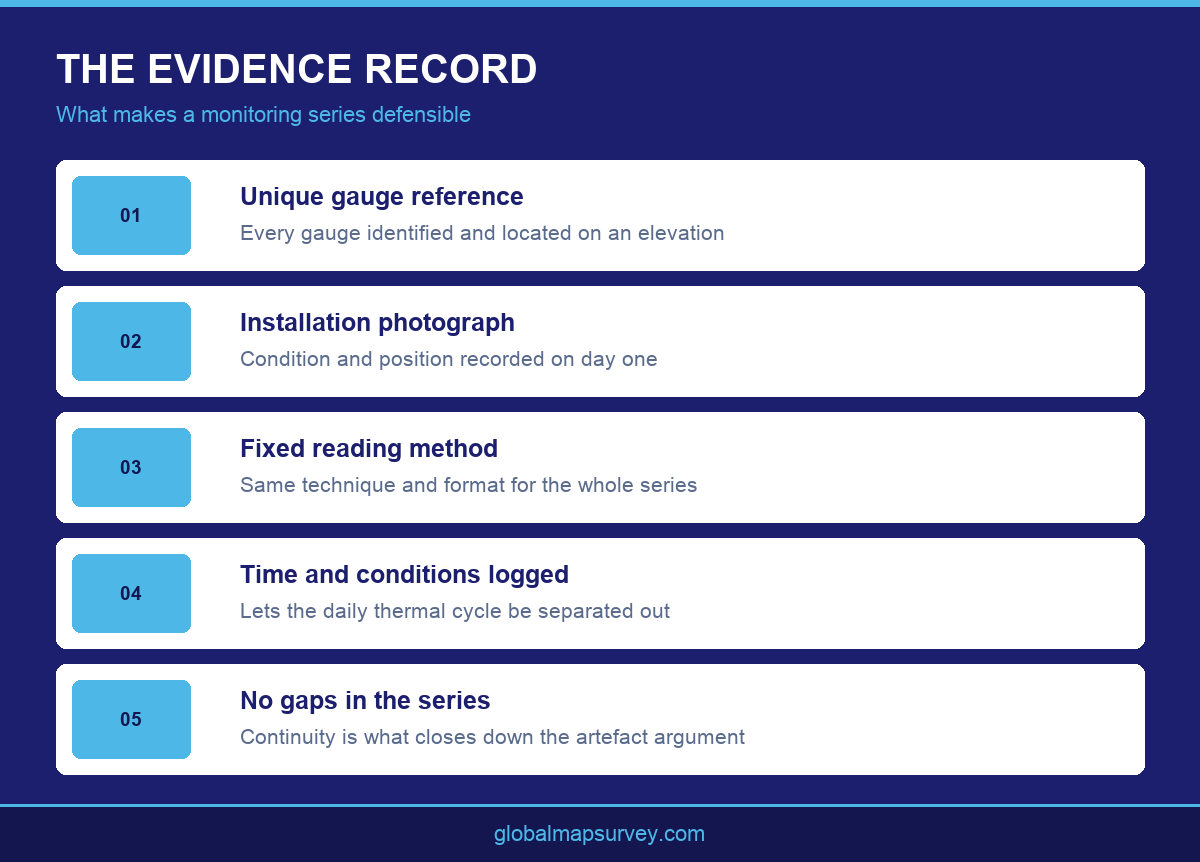
Crack monitoring is frequently commissioned because a dispute is either underway or likely. That makes the record as important as the readings. Each gauge should be photographed on installation, given a unique reference, located on a plan or elevation and logged with the date it went live.
Where the concern relates to neighbouring construction, monitoring usually sits alongside a dilapidation survey that documents the condition of the building before works begin. The dilapidation record establishes what existed beforehand. The monitoring record establishes what changed and when.
Consistency across the series is what makes the record credible. Same gauges, same reading method, same recording format, ideally the same reading times. A series with gaps and changed methods invites the argument that the apparent movement is an artefact of how it was measured, which is exactly the argument monitoring is meant to close down. Where movement proves real, deformation monitoring across the wider structure is usually the next step.
The record should also capture what was happening nearby. A crack that begins moving in the same week that piling started next door tells a very different story from one that has been moving steadily for a year. Noting site activity against the reading dates costs almost nothing and frequently turns out to be the detail that resolves the question. Where wider movement is suspected, structural settlement surveys across the building provide the context.
Conclusion
Crack monitoring services UAE answer one question well: is this crack still moving, and how fast. That answer, backed by a consistent record and read alongside level and geometry data, is what lets a structural engineer decide whether to act. Global Maps Survey Services installs and runs crack monitoring across Abu Dhabi and the UAE, on live construction sites and on buildings in dispute. Contact our monitoring team to discuss what you are seeing.
AN ISO 9001-2015 CERTIFIED COMPANY