Home \ Blog \ Why Hydrographic Survey Services in Abu Dhabi Matter for Offshore Projects
Why Hydrographic Survey Services in Abu Dhabi Matter for Offshore Projects
May 22, 2026
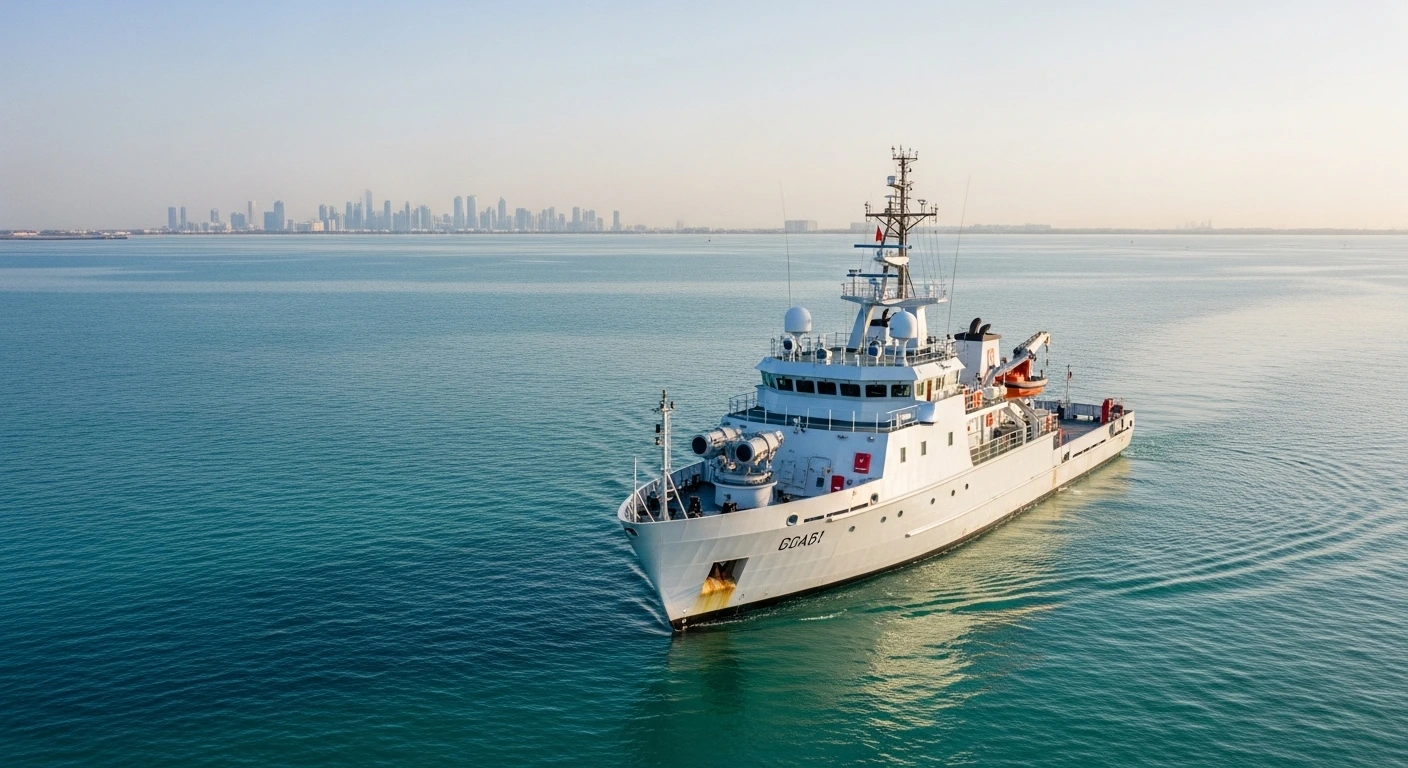
Abu Dhabi is one of the fastest-growing maritime hubs in the Middle East. With major port expansions, offshore infrastructure, and coastal development projects underway, the demand for hydrographic survey services in Abu Dhabi has never been greater. Accurate underwater mapping is critical for safe navigation, dredging operations, and marine construction planning. This guide covers what hydrographic surveys are, their key applications, the technologies involved, and why choosing the right surveying partner makes all the difference for your next marine project. test
Key Takeaways
- Hydrographic survey services in Abu Dhabi are essential for port development, dredging, offshore infrastructure, and coastal engineering projects.
- Techniques such as bathymetric surveys, side scan sonar, tidal observation, and offshore positioning provide the precise marine data projects require.
- Choosing an experienced, well-equipped survey team ensures data accuracy, regulatory compliance, and reduced project risk across UAE marine environments.
What Are Hydrographic Survey Services?
Hydrographic surveys measure and map the physical features of water bodies to support safe navigation, coastal engineering, and marine project planning.
Hydrographic survey services involve the systematic collection of data about underwater environments. This includes water depth, seabed composition, tidal behaviour, and current patterns. The data gathered informs engineers, planners, and port authorities at every stage of a marine project. According to the International Hydrographic Organization (IHO), accurate hydrographic data is the foundation of safe maritime navigation worldwide. In Abu Dhabi, where coastal development and offshore activity are expanding rapidly, these surveys are a non-negotiable requirement for any marine or nearshore project.
Key Applications of Hydrographic Surveys in Abu Dhabi
From port construction to dredging operations, hydrographic surveys serve a wide range of critical marine and coastal infrastructure needs across the emirate.
Hydrographic survey services in Abu Dhabi support a broad spectrum of projects. Port authorities rely on bathymetric data for channel design, berth depth verification, and navigation safety. Dredging contractors depend on pre and post dredging bathymetric services to measure excavation volumes and confirm project completion. Offshore developers need precise seabed mapping before laying pipelines or installing platform foundations. Coastal engineers use tidal and current data to design shoreline protection and assess flood risk. Each application demands high accuracy, specialist equipment, and experienced field teams.
Key applications include:
- Port and harbour development
- Offshore pipeline and cable routing
- Dredging volume measurement and verification
- Coastal erosion and shoreline change monitoring
- Marine construction and site investigation surveys
Core Techniques Used in Hydrographic Surveys
Modern hydrographic surveys use advanced sonar, positioning, and oceanographic measurement systems to deliver detailed and reliable underwater intelligence.
Professional hydrographic survey services in UAE rely on a combination of proven and advanced technologies. Multibeam and singlebeam bathymetric surveys are the primary methods for producing high-resolution seabed topography models. Side scan sonar systems generate detailed acoustic imagery of the seabed, identifying objects such as pipelines, debris, and rock outcrops. Sub-bottom profiling reveals geological layers beneath the seabed surface. Tidal observation systems record water level changes critical for accurate depth reduction and hydrodynamic studies. ADCP and current meter observations capture current velocity profiles across the water column, supporting tidal flow analysis and environmental assessments.
Key tools and methods include:
- Multibeam echo sounders for full-coverage 3D seabed mapping
- Side scan SONAR for high-resolution seabed imagery
- ADCP instruments for current velocity measurement
- Tidal gauges for water level monitoring and tide prediction
- Sub-bottom profilers for sediment and geological layer analysis
Why Hydrographic Survey Services in UAE Are Essential for Offshore Projects
Offshore and coastal infrastructure demands precise seabed intelligence, and hydrographic surveys provide the data foundation that makes safe, cost-effective development possible.
The UAE is home to some of the most active offshore development corridors in the world. From artificial islands to submarine cable routes, every marine project requires detailed hydrographic data before construction can begin. Hydrographic survey services in UAE are not only a technical requirement but also a regulatory one. Port and maritime authorities across the UAE mandate current and accurate survey data before approving dredging or marine construction permits. Investing in precise hydrographic data at the planning stage reduces design errors, minimises construction delays, and supports long-term asset management for ports, terminals, and offshore platforms.
How Global Map Survey Delivers Hydrographic Surveys in Abu Dhabi
Global Map Survey provides end-to-end hydrographic and marine survey solutions across Abu Dhabi and the wider UAE region, backed by experienced hydrographers and advanced equipment.
Global Map Survey offers comprehensive hydrographic survey services in Abu Dhabi that cover the full range of marine data collection and analysis needs. The team delivers multibeam and singlebeam bathymetric surveys, offshore positioning, tidal observation, beach profiling, and side scan sonar surveys for marine construction, dredging, and coastal engineering projects. For dredging contracts, pre and post dredging bathymetric services accurately track excavation progress and confirm final volumes. All survey data undergoes rigorous processing to meet international accuracy standards. Whether planning a new port facility, managing a dredging programme, or conducting an offshore site investigation, Global Map Survey delivers the precision and reliability your project demands.
Conclusion
Hydrographic survey services in Abu Dhabi are a critical foundation for any marine, offshore, or coastal development project. From seabed mapping and dredging volume surveys to tidal monitoring and offshore positioning, accurate underwater data enables safer planning, smoother regulatory approval, and stronger project outcomes. As Abu Dhabi continues to develop its maritime infrastructure, partnering with a specialist surveying team ensures your project is built on reliable, precise data. Contact Global Map Survey today to discuss your requirements and explore the full range of professional marine survey services available across Abu Dhabi and the UAE.
FAQ
Q1: What are hydrographic survey services in Abu Dhabi?
Answer: Hydrographic survey services in Abu Dhabi involve systematic measurement and mapping of underwater environments, including water depth, seabed features, tidal patterns, and current behaviour. These surveys support port development, offshore construction, dredging operations, and coastal engineering projects across the region.
Q2: Why are hydrographic surveys essential for offshore projects in the UAE?
Answer: Hydrographic survey services in UAE provide critical seabed data that offshore developers need before pipeline installation, platform construction, or cable routing. They reduce design risk, support regulatory approvals, and ensure safe, cost-effective execution of marine infrastructure projects.
Q3: What is the role of side scan sonar in hydrographic surveys?
Answer: Side scan sonar produces high-resolution acoustic images of the seabed, detecting pipelines, debris, rock formations, and submerged objects. This technique is widely used in pre-construction site investigations, cable route surveys, and port clearance operations across Abu Dhabi and UAE waters.
Q4: How do ADCP current meter observations support marine surveys?
Answer: ADCP and current meter observations measure water current velocity and direction across different depths of the water column. This data is essential for tidal flow analysis, environmental impact assessments, and safe navigation planning in Abu Dhabi offshore and nearshore environments.
Q5: What is seabed sampling and why is it important?
Answer: Seabed sampling collects physical sediment and material specimens from the ocean floor to analyse composition and geotechnical properties. This information guides foundation design for offshore structures, dredging planning, and environmental assessments in UAE coastal and marine construction projects. Learn more about our seabed sampling services at globalmapsurvey.com/sea-bed-sampling/
Q6: How are hydrographic surveys used in dredging projects?
Answer: Hydrographic surveys measure seabed levels before and after dredging to verify excavation volumes and confirm design depths are achieved. Accurate bathymetric data supports contractor payments, regulatory compliance reporting, and quality assurance throughout the project lifecycle in Abu Dhabi.
Q7: What is sub-bottom profiling in hydrographic surveys?
Answer: Sub-bottom profiling uses acoustic energy to image sediment and geological layers beneath the seabed surface. This reveals buried objects, rock profiles, and sediment thickness, vital for pipeline burial assessments, geotechnical investigations, and offshore infrastructure planning across UAE waters.
Q8: What is beach profiling and how does it support coastal projects?
Answer: Beach profiling measures cross-sectional changes in beach and shoreline topography over time. It helps coastal engineers monitor erosion rates, assess the impact of coastal structures, and design effective shoreline protection strategies for Abu Dhabi’s beaches and reclamation zones. Learn more at globalmapsurvey.com/beach-profiling/
Q9: How often should hydrographic surveys be conducted for ports and harbours?
Answer: Survey frequency depends on port activity levels, sedimentation rates, and regulatory requirements. High-traffic ports in Abu Dhabi typically conduct hydrographic surveys annually or after major storm events to ensure navigational safety, maintain channel depths, and meet maritime authority standards.
Q10: What qualifications should a hydrographic survey company in Abu Dhabi have?
Answer: A professional hydrographic survey company should employ certified hydrographers, operate calibrated multibeam and sonar systems, and follow international standards such as IHO S-44. Experience with UAE maritime regulations and offshore project environments is essential for delivering accurate, compliant survey data.
AN ISO 9001-2015 CERTIFIED COMPANY